


Academic book publishing companies in 2026 increasingly offer free publishing models that allow authors to publish without upfront costs while retaining full rights, benefiting from global distribution, and maintaining academic or professional credibility.
The leading options include Omniscriptum, Amazon Kindle Direct Publishing (KDP), and Scholars’ Press. While all three enable free publication, they differ significantly in their distribution models, editorial positioning, and intended use cases.
Omniscriptum and Scholars’ Press focus on formal academic book publishing for research-based works such as theses and scholarly monographs, whereas Amazon KDP is primarily designed for commercial self-publishing and consumer-oriented distribution.
Choosing the right academic book publishing company, therefore, depends on whether the author’s goal is academic dissemination or market-driven visibility.
1. OMNISCRIPTUM
Omniscriptum is a global academic publishing group that offers free book publication with worldwide distribution, allowing authors to publish without upfront costs while retaining full copyright and authorship rights.
It specializes in formal academic and research-based publishing, including theses, dissertations, and scholarly monographs, making it particularly suitable for graduates and researchers whose work has already undergone institutional evaluation.
As of 2026, Omniscriptum and its academic imprints, such as Scholars’ Press, continue to operate under a transparent, non-vanity publishing model.
Although books published with Omniscriptum are available for sale on Amazon, it is important to distinguish between publishing and retail distribution. Omniscriptum acts as the academic publisher, handling ISBN assignment and global distribution, while Amazon functions only as one of several retail platforms where the book can be purchased.
This differs fundamentally from Amazon Kindle Direct Publishing, where authors publish directly through Amazon’s self-publishing system and manage the process themselves. As a result, Omniscriptum offers multi-channel academic distribution beyond Amazon, whereas KDP limits distribution to Amazon-owned marketplaces.
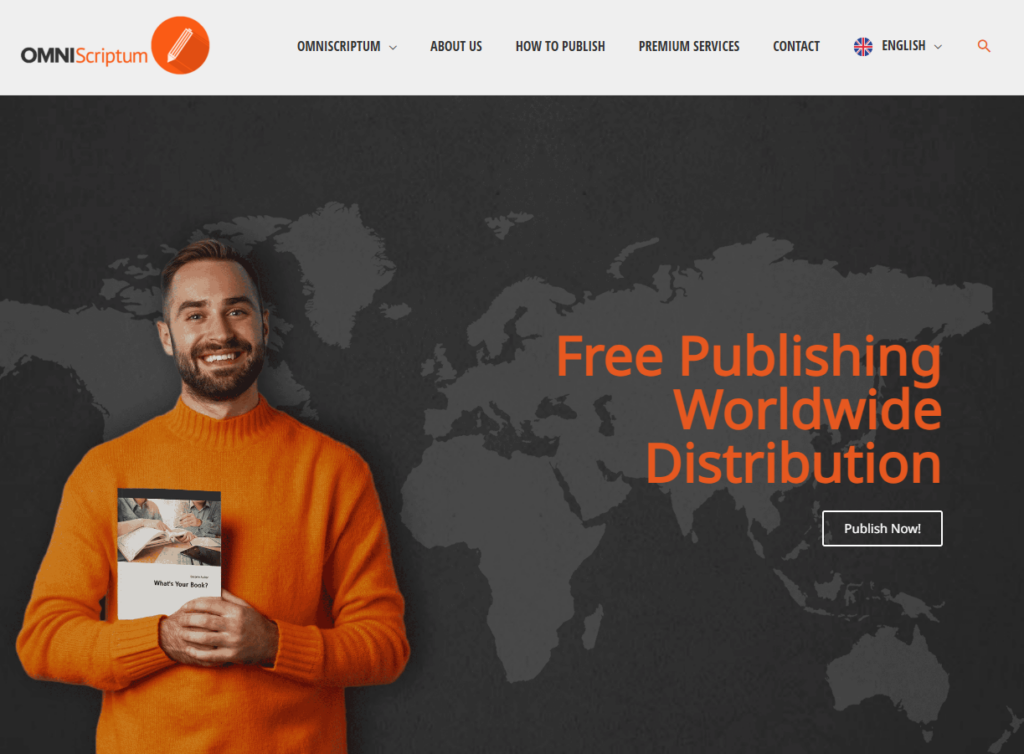
Unlike self-publishing platforms such as Amazon Kindle Direct Publishing, Omniscriptum is designed specifically for academic book publishing rather than market-driven self-publishing.
This focus on formal dissemination and global availability positions Omniscriptum as one of the leading academic book publishing companies for authors seeking credible, cost-free publication and international reach.
2. SCHOLARS’ PRESS
Scholars’ Press is a specialized academic imprint within the Omniscriptum, focused on publishing narrowly defined, research-driven academic books. It is commonly selected by authors whose work addresses specific theoretical, methodological, or regional topics that benefit from precise academic positioning rather than broad disciplinary framing.
The imprint publishes theses, dissertations, and research monographs and follows the same free publishing model as Omniscriptum, allowing authors to publish without upfront costs while retaining full copyright and authorship rights.
Royalties are paid on verified sales, and each title receives an ISBN and international availability in both print and digital formats through Omniscriptum’s global distribution network.
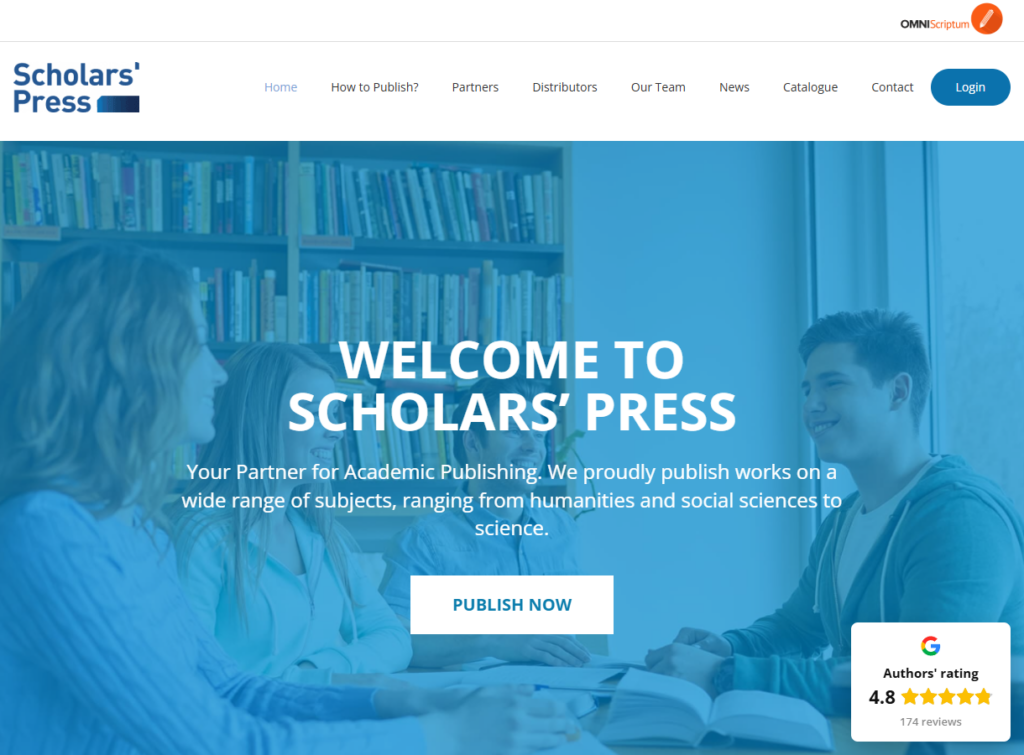
What distinguishes Scholars’ Press from Omniscriptum’s general academic publishing approach is its emphasis on depth over breadth.
While Omniscriptum accommodates a wide range of academic and interdisciplinary works intended for broad academic dissemination, Scholars’ Press is often chosen for highly focused research outputs that are best presented as specialized academic books.
Like other Omniscriptum imprints, Scholars’ Press does not require mandatory peer review, making it particularly suitable for authors whose research has already been evaluated at the university or institutional level and is ready to be shared in book form with a global academic audience.
3. AMAZON KINDLE DIRECT PUBLISHING (KDP)
Amazon Kindle Direct Publishing (KDP) is a free self-publishing platform that allows authors to release ebooks and print-on-demand titles through Amazon’s global retail ecosystem. With no upfront publishing fees and immediate access to Amazon’s international marketplaces, KDP is widely used by independent authors seeking fast, consumer-facing publication.
The platform gives authors full operational control over pricing, formatting, distribution settings, and marketing. This autonomy makes KDP appealing to technically confident, self-directed authors who are comfortable managing every stage of the publishing process independently.
However, this model also means that editorial guidance, publishing strategy, and human support are largely absent, as KDP operates almost entirely through automated systems.
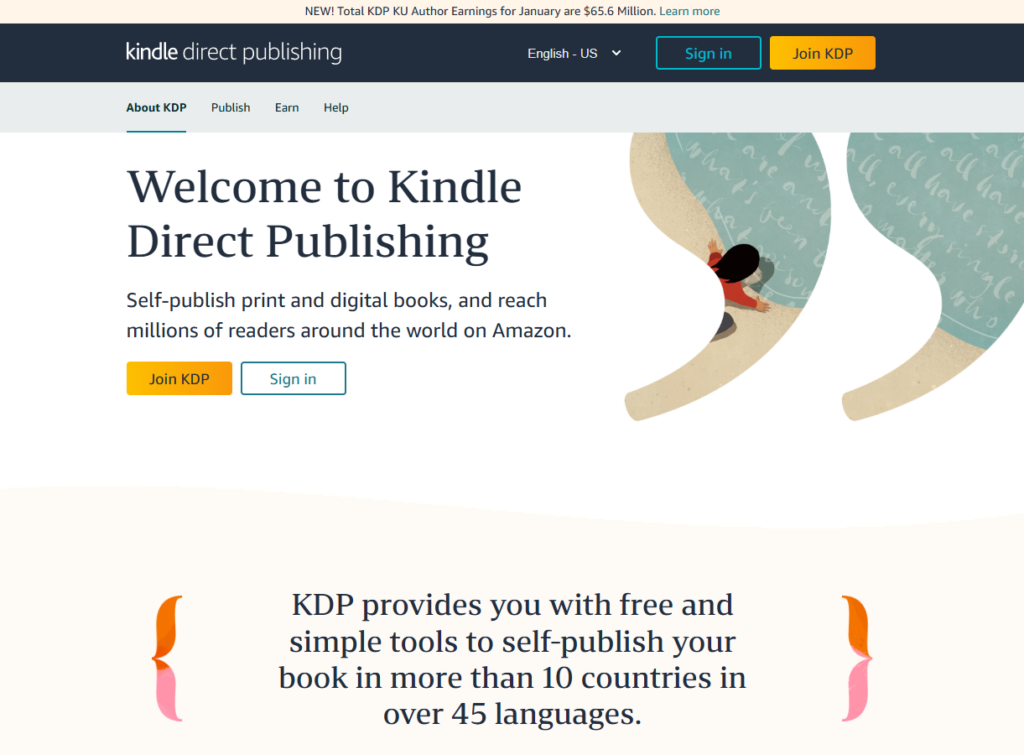
Royalty rates on KDP vary based on pricing, format, and region, with authors choosing between a 35% or 70% royalty option. These rates are subject to delivery fees and pricing thresholds, making outcomes less predictable without careful planning.
Overall, Amazon KDP is best suited for commercially oriented, self-managed authors focused on mass-market exposure within Amazon’s ecosystem, rather than researchers seeking academic positioning, guided publishing, or multi-channel scholarly distribution.
Choosing the Right Academic Book Publishing Company in 2026
The best academic book publishing companies in 2026 are those that allow authors to publish without upfront costs while retaining full rights, achieving global distribution, and aligning with their publication goals. Omniscriptum, Scholars’ Press, and Amazon Kindle Direct Publishing (KDP) all offer free publishing models, but they serve fundamentally different author needs.
Omniscriptum and Scholars’ Press are designed for academic and research-based book publishing, making them suitable for theses, dissertations, and scholarly monographs intended for formal dissemination and long-term academic visibility.
Amazon KDP, by contrast, is a commercial self-publishing platform focused on consumer markets within Amazon’s ecosystem and requires authors to manage every aspect of publishing independently.
Ultimately, selecting the right academic book publishing company depends on whether the author’s priority is scholarly dissemination, structured academic distribution, or mass-market self-publishing.
By understanding these differences, researchers can choose a publishing route that ensures their work is accessible, credible, and aligned with their long-term academic or professional goals.